
The Budget System That Works Even When You Ignore It for Two Weeks
Free download: 10 ADHD-friendly rules for people who forget to track expenses, lose motivation, and need systems that actually survive real life.


For three years, I tried every budgeting method I could find.
The envelope system. Zero-based budgeting. Those apps that yell at you. A color-coded spreadsheet that took four hours to set up and zero days to maintain.
None of it worked. Not because I was bad with money—but because every system made assumptions: that I’d track daily, stay motivated, never impulse buy when stressed.
The real problem
Traditional budgeting is designed for brains that stay organized and motivated consistently. It assumes you’ll do boring tasks just because they’re “good for you.”
But some of us work in bursts, not steady rhythms. We need systems that survive forgetfulness and account for right-now feelings, not spreadsheet projections.
I have ADHD, so this is my reality. But most people I know—diagnosis or not—struggle with the same things.
So I built something different
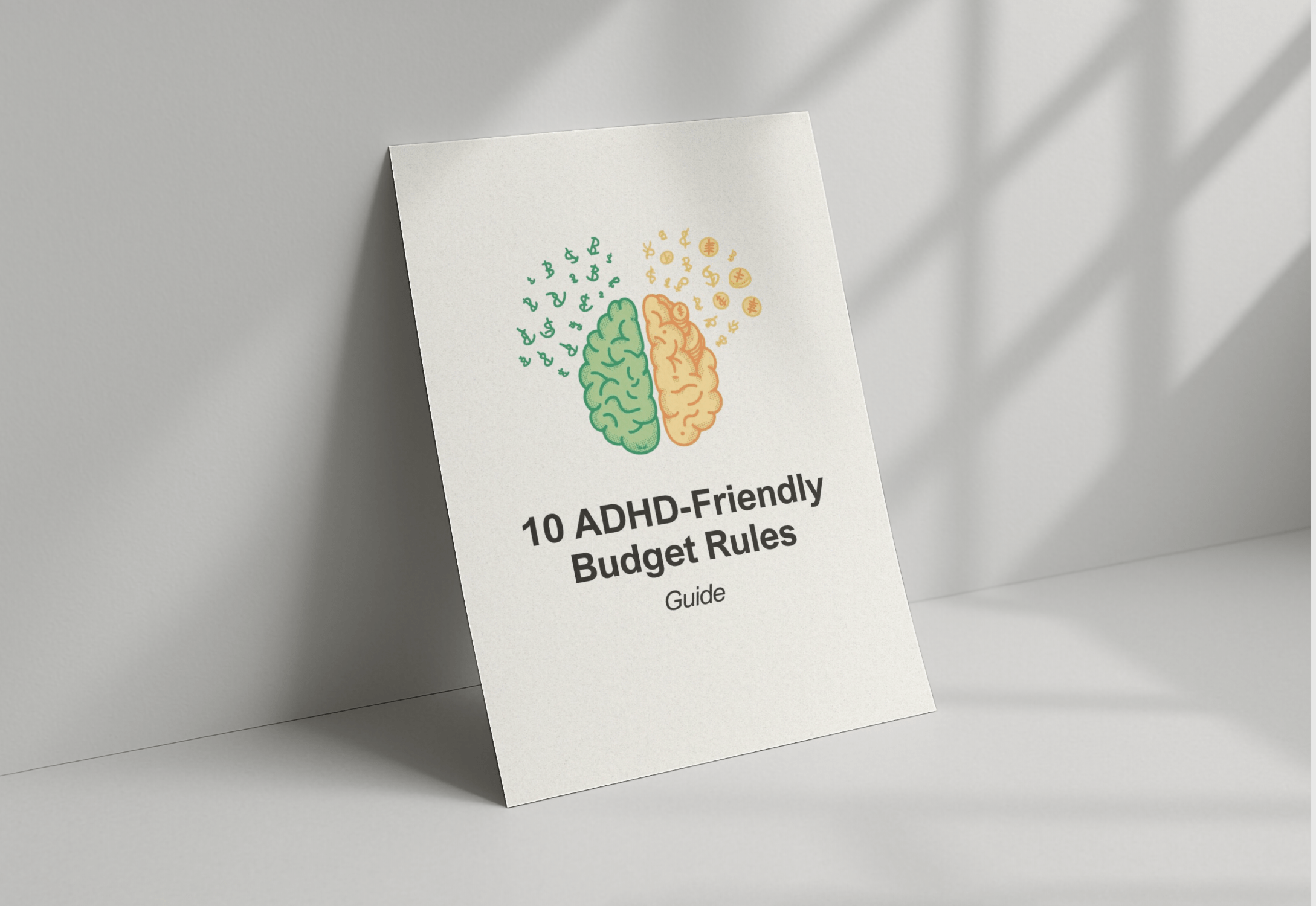
10 Budget Rules That Work With Your Brain, Not Against It.
What’s inside:
- How to build a budget that survives you ignoring it for two weeks
- The “dopamine tax” (impulse purchases) and how to actually budget for it
- Why some “bad” money habits are fine and which ones aren’t
Get the free guide
I turned these rules into a free PDF guide.
No email required. No funnel. No “limited time” pressure. Just download it and use it.
If it genuinely helps you, you can pay what feels right—think of it as tipping your barista, not buying a product. But it’s completely optional. I mean that.
Download: 10 ADHD-Friendly Budget Rules →
I made this because I needed it. People have downloaded it and given feedback that it actually works—not because it’s revolutionary, but because it’s realistic.
If traditional budgeting has never clicked for you, maybe your brain just needs different instructions.
— Olena
P.S. — Tips are completely optional. If the guide helps you and you want to contribute something, that’s appreciated. But the value is in you actually using it, not in you paying for it.
⚖️ Important Disclaimer
This post shares my personal experience and is for educational purposes only. I am not a financial advisor, and this should not be considered professional financial advice.
Always consult with qualified professionals for your specific financial situation. Your results may vary, and past performance doesn’t guarantee future outcomes.
Please consider your own financial circumstances and risk tolerance before implementing any strategies discussed.
This is very interesting! I look forward to seeing how it works, as I find myself struggling with these very issues. Thank you for sharing.
I love how this acknowledges real human behavior instead of pretending discipline alone fixes everything. Systems that adapt to our rhythms last far longer than ones that demand perfection.